
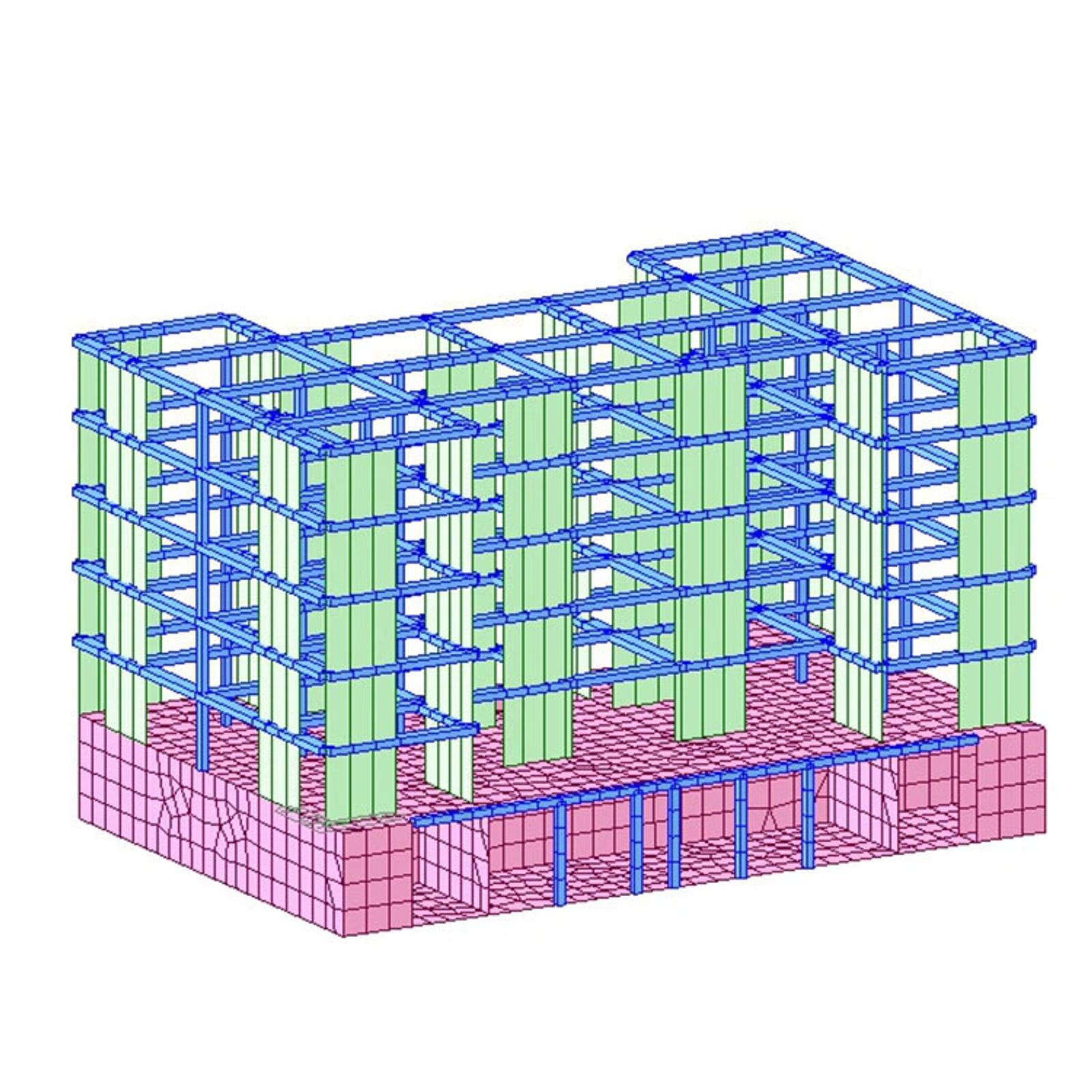
Why boiler plants are vulnerable
Three reasons.
- Concentrated mass. Boilers, deaerators and feedwater tanks are heavy, rigid and usually mounted at grade or on a basement slab. The structure above carries them.
- Rigid pipe runs. Steam and condensate piping doesn't flex. Where it crosses building joints or connects to equipment, it cracks.
- Equipment connections. Pumps and motors anchor into concrete that wasn't designed for lateral loads. The connections are usually the first thing to fail.
What the VA Seismic Design Guide asks for
The VA Design Guide for seismic upgrades is rigorous. It addresses both structural components (the building frame) and non-structural components (everything inside — piping, conduits, equipment, ductwork). For mission-critical buildings like boiler plants, both have to be evaluated and upgraded together.
Done right, the building stays operational through a code-level event. Done wrong, the structure survives but the heating system doesn't — which is its own kind of failure.
Three upgrade methods that work
1. Buttress walls on piers
For aging masonry or concrete boiler plants, exterior buttress walls supported on new piers add lateral stability without disturbing the interior systems. We used this approach on a recent $6.5M East Orange VA boiler plant upgrade.
2. Structural steel roof reinforcement
Many older boiler plants have undersized roofs that won't support seismic loads or the equipment currently sitting on them. Adding steel members below the deck is invasive but far cheaper than a roof replacement.
3. Seismic bracing of piping and conduits
Often the most overlooked piece. Every pipe and conduit run over a certain diameter needs lateral and longitudinal bracing per ASCE 7. Skip it and the building shell survives while the systems inside fail.
The hardest part: sequencing
You can't shut a hospital boiler plant down. Every upgrade has to phase around continuous operation — temporary boilers, parallel piping, weekend tie-ins. Half the engineering on these projects is the construction sequencing, not the structural design.
Bottom line
Seismic upgrades on aging boiler plants are doable, but they're not generic structural work. Get an engineer who knows the VA Design Guide, the code requirements for non-structural components, and how to phase the work without taking the building offline.